
Wondering how to price Etsy products without losing money? Use this simple beginner guide and formula to price your items for maximum profit.
Pricing your Etsy products can feel overwhelming when you’re just starting.
Charge too much, and you worry nobody will buy.
Charge too little, and you may work hard without making a profit.
Many beginners believe pricing is about matching competitors or choosing a number that “feels right.”
In reality, good pricing is based on understanding your costs, knowing your market, and offering value to your customers.
In this guide, you’ll learn how to price your Etsy products confidently as a beginner, whether you’re selling digital products, handmade items, or Print on Demand products.
Why Learning How to Price Etsy Products Matters

Pricing is one of the biggest challenges for new Etsy sellers because there isn’t one perfect price.
Two shops can sell similar products at very different prices and still succeed.
That’s because buyers don’t only compare prices.
They also consider:
- product quality
- design
- reviews
- branding
- customer service
- perceived value
Many beginners focus only on being the cheapest seller.
Unfortunately, that’s rarely the best long-term strategy.
Beginner Tip
Don’t ask, “How cheap can I sell this?”
Instead ask:
“How can I create enough value that buyers feel this price is worth paying?”
Understand Your Costs
Before setting any price, you need to know what your product actually costs.
If you don’t understand your costs, it’s impossible to know whether you’re making a profit.
Physical Products
Include costs such as:
- materials
- packaging
- shipping supplies
- production
- printing
- Etsy fees
- advertising
- taxes (where applicable)
Digital Products
Digital products usually have lower ongoing costs, but they’re not free to create.
Consider:
- software subscriptions
- design tools
- fonts
- graphics
- mockup tools
- Etsy fees
- your time
Many beginners forget that their time also has value.
Even if creating a printable costs almost nothing to deliver, it may have taken hours to design.
Quick Example
Imagine you sell a handmade candle.
Your total costs include:
- wax
- fragrance oils
- jar
- label
- packaging
- Etsy fees
If those costs add up to $12, pricing the candle at $13 leaves almost no profit.
Understanding your costs helps you avoid pricing mistakes before they happen.
Research Competitors (But Don’t Copy Them)
Competitor research is helpful.
Copying competitor prices is not.
Search Etsy for products similar to yours and observe:
- average pricing
- product quality
- presentation
- number of reviews
- what’s included
This helps you understand the market.
However, remember that every seller has different:
- costs
- experience
- business goals
A shop with thousands of sales may be able to price differently than a brand-new seller.
Use competitor pricing as a reference—not a rule.
Common Mistake
Many beginners simply copy the cheapest listing they find.
That seller may have:
- lower production costs
- bulk discounts
- years of experience
- a completely different business model
Always calculate your own numbers first.
Price Based on Value, Not Fear
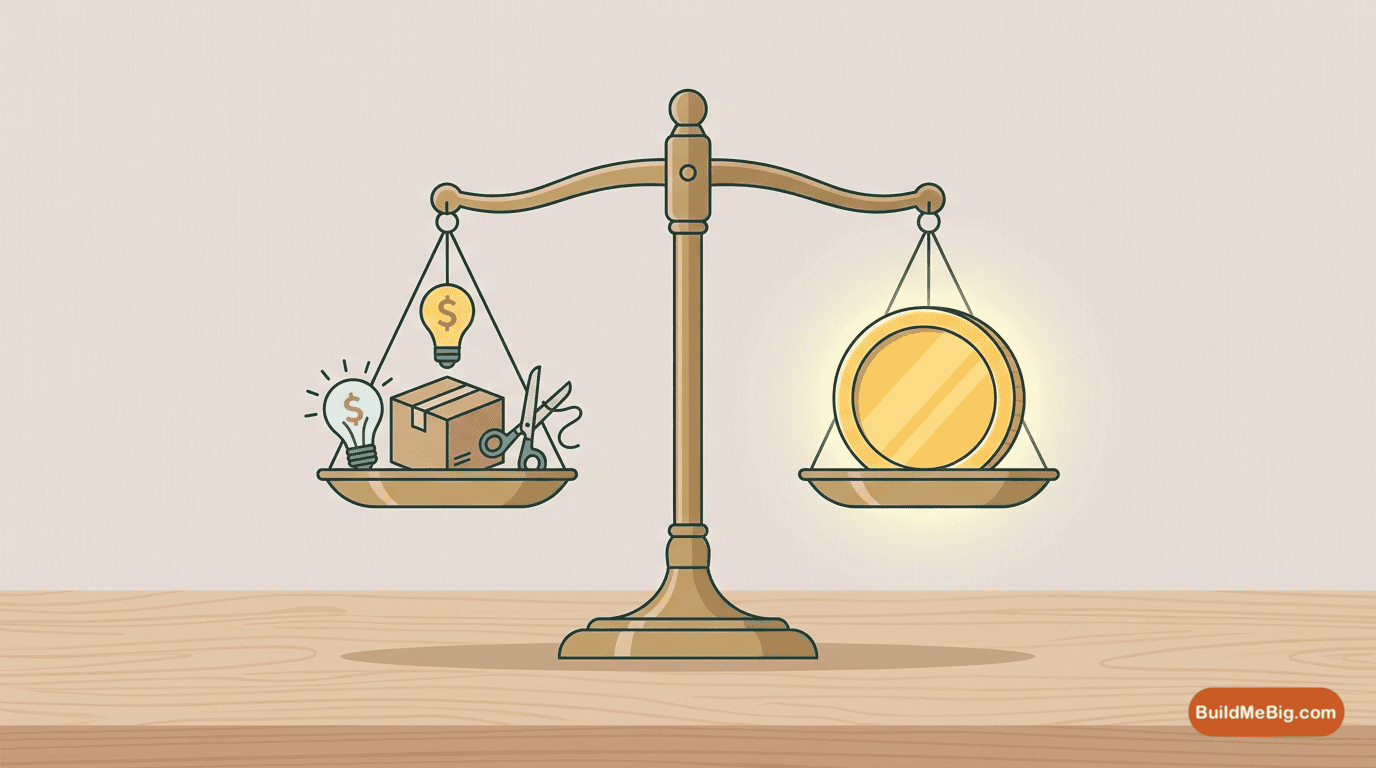
One of the biggest pricing mistakes beginners make is lowering prices because they’re afraid nobody will buy.
Unfortunately, cheaper isn’t always better.
Very low prices can make buyers wonder:
- Is the quality poor?
- Is this product reliable?
- Why is it so much cheaper than everything else?
Instead of competing only on price, compete on value.
You can increase value by offering:
- better designs
- extra files
- faster delivery
- personalization
- clear instructions
- professional branding
Customers often pay more when they believe they’re getting a better overall experience.
Beginner Tip
People don’t always buy the cheapest product.
They buy the product that gives them the most confidence.
Pricing Digital Products vs Physical Products
Digital and physical products require different pricing strategies.
Pricing Digital Products
Digital products don’t require inventory or shipping.
Examples include:
- printables
- planners
- Canva templates
- wedding invitations
- budgeting spreadsheets
Although delivery costs are low, remember that you’re selling your knowledge, creativity, and design—not just a digital file.
Avoid pricing your work too low simply because it’s digital.
Pricing Physical Products
Physical products involve additional expenses, including:
- materials
- production
- packaging
- shipping
- inventory
You’ll need to account for these ongoing costs when setting prices.
Many successful handmade sellers charge premium prices because buyers value craftsmanship and originality.
Quick Example
Two sellers both offer printable planners.
| Seller A includes: | Seller B includes: |
| • one planner page | • weekly planner • monthly planner • budget tracker • habit tracker • matching stickers |
Even if both products solve the same problem, Seller B can often justify charging more because the buyer receives greater value.
Don’t Forget Etsy Fees
Many beginners focus only on product costs.
They forget Etsy also charges fees.
Common Etsy costs include:
- listing fees
- transaction fees
- payment processing fees
- Offsite Ads fees (when applicable)
If you ignore these costs, your profits may be much lower than expected.
Related guide:
Etsy Fees Explained for Beginners
Understanding your fees helps you build a healthier business.
Consider Your Target Customer
Pricing should also match your target audience.
Ask yourself:
- Who is buying this product?
- What problem does it solve?
- How valuable is that solution?
For example:
A wedding planning template may save someone hours of work.
A business spreadsheet may help someone manage their finances more efficiently.
Products that solve bigger problems often justify higher prices.
Avoid Racing to the Bottom
Some beginners believe lowering prices is the fastest way to get sales.
Unfortunately, competing only on price creates several problems.
It can lead to:
- lower profits
- burnout
- attracting bargain shoppers
- difficulty raising prices later
Instead, focus on creating products buyers genuinely value.
A sustainable business is usually built on quality—not being the cheapest seller.
Common Mistake
Many beginners think:
“No one will buy if I charge more.”
In reality, buyers often compare:
- photos
- branding
- reviews
- product quality
—not just price.
When Should You Raise Your Prices?
Raising prices can feel uncomfortable.
However, it’s often the right decision.
You might consider increasing prices when:
- demand is strong
- your skills improve
- production costs increase
- you’ve added more value
- you have consistent sales
Price increases don’t need to be dramatic.
Small adjustments over time often feel more natural.
Remember to monitor how your products perform after making changes.
Beginner Tip
If your products are consistently selling and customers leave positive reviews, it may be worth testing a small price increase.
Test Different Price Points
Pricing isn’t something you set once and never revisit.
Many successful Etsy sellers experiment.
For example, you might test:
- one price for several weeks
- then make a small adjustment
- compare the results
Sometimes a slightly higher price performs just as well—or even better.
Avoid making constant changes every few days.
Give your listings enough time to collect meaningful data.
Think About Long-Term Growth
Your pricing should support the business you want to build.
Ask yourself:
- Can I still make a profit if sales increase?
- Can I afford advertising?
- Can I improve my products?
- Can I continue offering excellent customer service?
A profitable business is much easier to grow than one built on extremely low prices.
Final Thoughts
Pricing your Etsy products isn’t about finding the perfect number.
It’s about balancing:
- your costs
- customer value
- market demand
- long-term profitability
As a beginner, remember these key principles:
- Know your costs.
- Research competitors without copying them.
- Focus on value instead of fear.
- Account for Etsy fees.
- Test and improve over time.
Most successful Etsy sellers adjust their pricing as their shops grow.
Don’t be afraid to learn from your results and make changes when necessary.
The goal isn’t simply making a sale.
The goal is building a profitable business that can continue growing for years.
FAQs about How to Etsy Price Products
How do beginners price Etsy products?
Start by calculating your costs, researching similar products, and choosing a price that allows for a reasonable profit.
Should I charge less because my shop is new?
Not necessarily. While competitive pricing is important, pricing too low can reduce profits and make your products seem less valuable.
How do I price digital products on Etsy?
Consider the value you provide, the time spent creating the product, software costs, and Etsy fees rather than assuming digital products should always be inexpensive.
Should I copy competitor prices?
No. Competitor pricing is useful for research, but your final price should reflect your own costs and business goals.
When should I increase my Etsy prices?
Consider raising prices when demand is consistent, your products improve, or your business costs increase.
Do Etsy fees affect pricing?
Yes. Listing fees, transaction fees, payment processing fees, and other costs should all be considered when calculating your selling price.
Is being the cheapest seller the best strategy?
Usually not. Buyers often value quality, branding, and trust more than the absolute lowest price.
Can I change my Etsy prices later?
Yes. Many successful sellers review and adjust their prices over time as they gain experience and better understand their market.