
Starting an Etsy shop is exciting.
But many beginners jump straight into creating products without making a simple Etsy business plan.
As a result, they often:
- choose the wrong products
- underestimate costs
- struggle to market their shop
- give up after a few weeks
The good news is that you don’t need a 50-page business plan to build a successful Etsy shop.
A simple one-page plan is enough to give your business direction and help you make smarter decisions.
Before creating your business plan, it’s worth reviewing the Etsy Checklist for Beginners: Everything You Need Before Opening Your Shop to make sure you’ve covered the essentials.
In this guide, you’ll learn how to create an Etsy business plan step by step, along with a free template you can customize for your own shop.
Why Every Etsy Seller Needs a Simple Business Plan
A business plan isn’t just for large companies.
It’s a roadmap that helps you stay focused as your shop grows.
Instead of asking yourself, “What should I do next?” every week, you’ll already have a clear direction.
A simple Etsy business plan can help you:
- define your goals
- choose the right products
- understand your startup costs
- plan your marketing
- track your progress
- stay motivated
The goal isn’t to predict the future.
It’s to make better decisions today.
Beginner Tip
Your first business plan doesn’t have to be perfect.
Create a simple version now, then update it as you gain experience.
Step 1: Set Your Etsy Shop Goals
Start by deciding what success looks like for you.
Ask yourself questions such as:
- Why do I want to start an Etsy shop?
- Do I want extra income or a full-time business?
- How many products do I want to launch?
- What skills do I want to develop?
Your goals should be realistic and measurable.
For example:
- Publish 20 listings in the first three months.
- Make my first Etsy sale.
- Reach $500 in monthly revenue.
- Learn the basics of Etsy SEO.
Breaking large goals into smaller milestones makes them feel much more achievable.
If you haven’t decided what to sell yet, my guide on How to Find Profitable Etsy Product Ideas can help you discover opportunities based on market demand.
Quick Example
Instead of saying:
“I want a successful Etsy shop.”
Write:
“I will publish 25 listings and work toward my first 10 sales within the next six months.”
That’s a goal you can actually measure.
Step 2: Choose Your Product Niche
Your business plan should clearly define what you’ll sell.
Rather than trying to sell everything, focus on one niche in the beginning.
Examples include:
- printable planners
- wedding templates
- wall art
- handmade jewelry
- candles
- baby gifts
- home décor
A focused niche makes it easier to:
- attract the right customers
- create consistent branding
- improve your Etsy SEO
You can always expand your product range later.
Before committing to a niche, validate your idea using the strategies in How to Validate an Etsy Product Idea Before You Sell It.
Common Mistake
Many beginners list unrelated products in the same shop.
A focused shop often builds trust more quickly than one that sells a little bit of everything.
Step 3: Estimate Your Startup Costs
One of the biggest mistakes new sellers make is underestimating how much it costs to start.
Even digital product businesses have expenses.
Your startup costs might include:
- Etsy listing fees
- design software
- mockup tools
- fonts or graphics
- packaging (for physical products)
- shipping supplies
- marketing
Create a simple budget before opening your shop.
Knowing your expected costs helps you price your products more confidently.
Don’t forget to include Etsy’s selling fees in your budget. Read Etsy Fees Explained for Beginners to understand the costs involved.
Step 4: Create a Marketing Plan
Creating great products isn’t enough if nobody knows they exist.
Every Etsy business plan should include a simple marketing strategy.
Think about how you’ll bring visitors to your shop.
Some beginner-friendly options include:
A. Pinterest
Pinterest works like a visual search engine and can send long-term traffic to your Etsy shop or website.
Create helpful, eye-catching pins that link to your products or blog posts.
B. Etsy SEO
Optimizing your titles, tags, categories, and descriptions helps shoppers discover your listings through Etsy search.
SEO takes time, but it can provide consistent organic traffic.
C. Social Media
Choose one platform where your ideal customers spend time.
You don’t need to be active everywhere.
It’s usually better to focus on one platform and post consistently.
Organic traffic can become one of your biggest assets over time. Learn How Etsy Search Works and How to Get More Views on Etsy Listings to improve your visibility.
Quick Example
A simple weekly marketing plan could look like this:
- Publish one new Etsy listing.
- Create three Pinterest pins.
- Share one Instagram post or Reel.
- Review one existing listing and improve it.
Small, consistent actions add up over time.
Step 5: Set Monthly Revenue Goals
Your business plan should include realistic financial goals.
Don’t focus only on making millions.
Instead, work toward achievable milestones.
For example:
Month 1:
- Publish listings
- Learn Etsy SEO
- Aim for your first sale
Month 3:
- Increase listings
- Improve traffic
- Reach consistent monthly sales
Month 6:
- Expand your product range
- Increase average order value
- Build repeat customers
Remember, every successful Etsy shop started with zero sales.
Progress matters more than perfection.
Pricing also affects your revenue goals. If you’re unsure where to start, read How to Price Your Etsy Products as a Beginner.
Common Mistake
Many beginners expect full-time income within a few weeks.
Building a successful Etsy shop usually takes patience, learning, and consistency.
Step 6: Review Your Plan Regularly
Your business plan isn’t something you write once and forget.
Set aside time each month to review questions like:
- What’s working?
- Which products are getting views?
- Which listings need improvement?
- What should I create next?
Your plan should grow as your business grows.
Small adjustments over time are completely normal.
Common Beginner Mistakes
Avoid these common planning mistakes.
A. Starting Without Research
Understand your market before creating products.
B. Choosing Too Many Niches
Stay focused until you understand what your customers want.
C. Ignoring Marketing
Publishing listings is only part of the process.
You also need a plan for getting traffic.
D. Unrealistic Expectations
Most Etsy shops take time to grow.
Focus on steady improvement rather than overnight success.
E. Never Reviewing Your Plan
A business plan is a living document.
Update it as your goals and business evolve.
Avoid the most common pitfalls by reading Etsy Seller Mistakes Beginners Make (And How to Avoid Them) before launching your shop.
Free Etsy Business Plan Template
Want a ready-to-use version? Download the free 6-page Etsy Business Plan Template to plan your shop, target customer, products, startup budget, marketing strategy, and 90-day goals.
Free PDF • 6 pages • Printable • No sign-up required
Prefer a quick version? Use the copyable Etsy business plan template below.
Shop Name
Target Audience
Product Niche
Products to Launch
Startup Budget
Marketing Strategy
- Etsy SEO
- Social Media
- Email List
Monthly Goals
- Listings:
- Sales:
- Revenue:
Long-Term Goal
Keep this template somewhere you’ll review regularly.
Want a Printable Version?
If you’d rather fill out your business plan on paper or digitally, a printable template can make planning much easier.
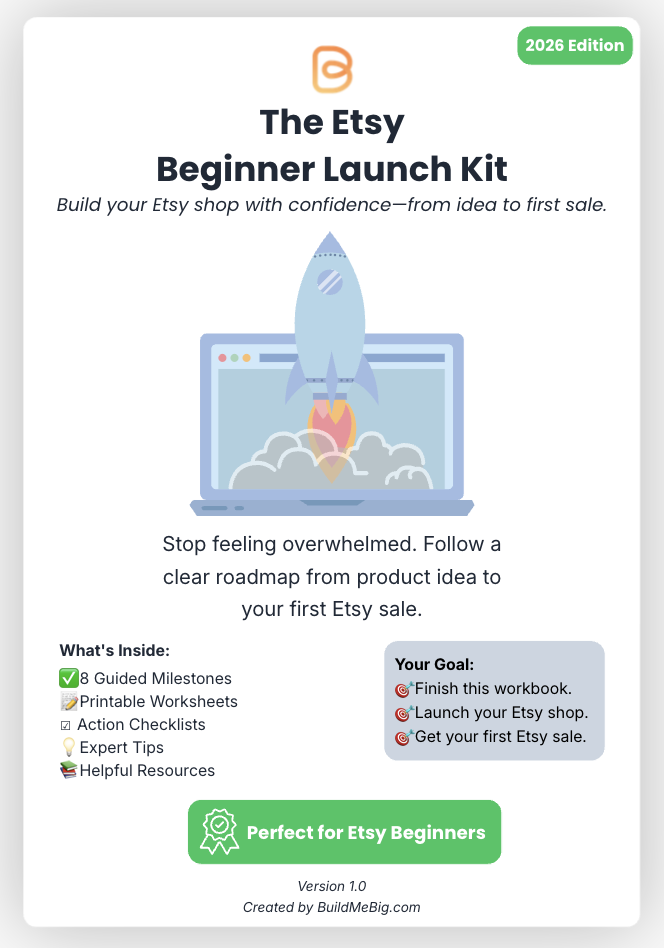
The Etsy Beginner Launch Kit includes:
Designed specifically for first-time Etsy sellers who want a clear, step-by-step roadmap.
Only $9 • Instant PDF Download • Secure Checkout via Gumroad
✔ Instant Download
✔ Secure Checkout
✔ Lifetime Access
📄 PDF Format
🖨 Printable
📱 Mobile Friendly
- 20-page printable workbook
- 8 practical milestones
- Beginner friendly
- Instant digital download
Once your business plan is ready, your next step is to Create Your First Etsy Listing and start building momentum toward your first sale.
Final Thoughts
You don’t need a complicated business plan to build a successful Etsy shop.
A simple roadmap is often all you need.
Focus on:
- setting clear goals
- choosing a niche
- understanding your costs
- creating a marketing plan
- tracking your progress
- improving consistently
Remember, your business plan isn’t about predicting the future.
It’s about giving yourself direction.
The best time to create your Etsy business plan is before you open your shop.
The second-best time is today.
FAQs about Etsy Business Plan for Beginners
Do I really need a business plan to start an Etsy shop?
No, Etsy doesn’t require one. However, having a simple business plan can help you stay organized, set realistic goals, and make better business decisions.
How long should an Etsy business plan be?
For most beginners, one or two pages are enough. Keep it simple and update it as your shop grows.
What should I include in an Etsy business plan?
Include your goals, product niche, startup costs, marketing strategy, monthly targets, and long-term vision.
How much money do I need to start an Etsy shop?
It depends on what you sell. Digital product shops often have lower startup costs than physical product businesses, but every shop should budget for Etsy fees and essential tools.
Should I plan my marketing before launching?
Yes. Even a basic marketing plan can help you attract visitors and stay consistent after your shop goes live.
How often should I update my business plan?
Review it at least once a month. Update your goals, marketing strategy, and product plans as you learn more about your business.
Can I change my niche later?
Yes. Many successful Etsy sellers expand or refine their niche over time as they discover what their customers want.
Is the Etsy Beginner Launch Kit necessary?
No. You can create your own plan using the free template in this guide. A printable launch kit simply provides additional worksheets and checklists to make the process easier.